How to Spot Roof Damage from the Ground (No Ladder Required)
After a nasty storm rolls through, your first instinct might be to pull the ladder out of the garage and climb up to take a look. Don't do it — here's everything you can spot without ever leaving your yard.

After a nasty storm rolls through, your first instinct might be to pull the ladder out of the garage and climb up to take a look.
Don't do it.
Every year, tens of thousands of homeowners end up in the emergency room from ladder falls. Beyond the safety risk, an untrained eye walking across a damaged or hot asphalt roof can actually cause more harm to the shingles.
The good news? You can spot almost every major sign of roof trouble right from your front yard. All you need is a pair of binoculars, a flashlight, and a few minutes to walk around your property.
Here is what to look for and where to look without ever leaving the ground.
1. Look for Visual Clues on the Roof Itself
Grab your binoculars, step out into the yard where you have a clear line of sight, and scan the slope of your roof section by section.
- Curling or Cupping Edges: When asphalt shingles age or suffer heat damage, their edges start to curl upward or cup inward. This makes them extremely vulnerable to wind uplift during the next storm.
- Missing or Cracked Shingles: Look for obvious gaps in the pattern. A single missing shingle might not look like a big deal, but it leaves the underlayment directly exposed to sunlight and rain.
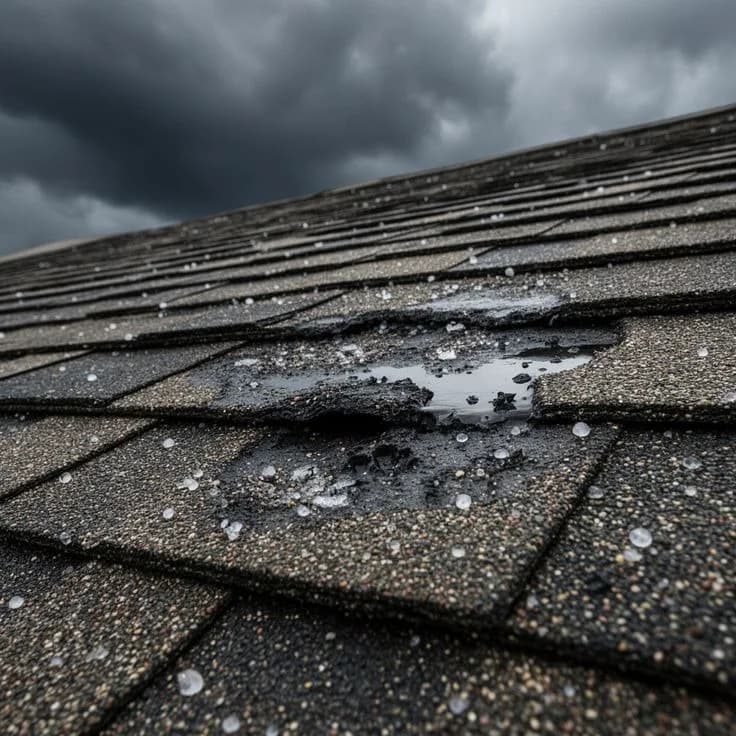
- Dark, Bare Spots (Granule Loss): Asphalt shingles are coated with fine mineral granules that shield them from UV rays. When hail hits or shingles reach the end of their lifespan, those granules knock off. From the ground, this looks like dark, patchy spots or discoloration across the roof.
- Lifted Flashing Around Chimneys and Vents: Flashing is the thin metal strip placed around roof penetrations (like chimneys, skylights, and vent pipes). If you see metal peeling away or bent out of shape, water will find its way inside during the next heavy rain.
2. Check the Ground and Gutters
Sometimes the best evidence of roof damage isn't on the roof at all. It's sitting at your feet or inside your downspouts.
- Heavy Granule Buildup in Downspouts: Check the base of your downspouts after a rainstorm. A few loose granules are normal for a brand-new roof, but if you see pileups that look like coarse black sand, your shingles are rapidly shedding their protective coating.
- Shingle Fragments in the Yard: Walk around your perimeter and check the garden beds, patio, and lawn. If you find broken pieces of shingle tabs or loose roofing nails, your roof suffered wind damage.
- Dents on Metal Surfaces: Look at your gutters, downspouts, metal window sills, and even your AC unit outside. If you see small, round dents on these soft metal surfaces, it's a massive giveaway that hail hit your home hard enough to bruise or crack your shingles.
3. Look at the Underside (Fascia, Soffits, and Eaves)
Stand near the base of your home and look straight up under the roof overhangs.
- Water Stains or Peeling Paint: If water is leaking past the shingle line, it often pools around the soffit (the underside of the roof overhang) or fascia board (the board behind your gutters). Look for dark rings, soft wood, or flaking paint.
- Sagging Gutter Lines: Gutters that are pulling away from the house or sagging under weight can trap standing water right against the edge of your roof deck, leading to hidden rot.
4. Take 5 Minutes to Inspect Your Attic
You don't need to crawl into tight corners, but popping your head into the attic with a flashlight during or right after a rainstorm can confirm what you suspect from the yard.
- Daylight Pinholes: Turn off your flashlight for a moment. If you see tiny specks of daylight coming through the roof boards, water can and will get through those same spots.
- Musty Odors or Dark Stains: Smelling dampness or noticing dark streaks along the underside of the plywood decking or rafters means water has already breached the outer layer.
Pro Tip: The Rule of Thumb: If you notice missing shingles, heavy granule loss, or dented gutters from the ground, don't wait for a ceiling stain to appear in your living room. Small roof leaks can rot underlying wood decking long before they ever drip through your drywall.
What to Do Next
If your ground inspection turns up any of these red flags, skip the ladder and call a licensed, local roofing professional. Most reputable contractors offer free, no-obligation roof inspections. They have the safety gear, insurance, and experience to climb up, document the exact damage with photos, and help you determine whether it's a simple patch job or an insurance claim.
A pair of binoculars and a few minutes in the yard could save you a trip to the emergency room, and help you catch a roof problem long before it becomes a five-figure repair.