7 Warning Signs Your Roof Is About to Leak
Nobody wakes up in the morning hoping to deal with a roof leak. Most of the time, we don't even think about our roofs until water is actively dripping into a plastic bucket in the middle of the living room. But here's the thing: roofs rarely fail out of nowhere. Long before that first drop of water ruins your drywall, your roof is sending out warning signs.
Catching these early red flags can mean the difference between a quick, inexpensive patch job and a massive insurance claim for structural water damage. If you want to catch a leak before it starts, keep an eye out for these seven warning signs.
1. Shingles That Are Curling or Cupping
When asphalt shingles reach the end of their lifespan, the heat from the sun and general weathering causes them to lose flexibility. They'll either start "cupping" (where the edges curl upward) or "clawing" (where the middle buckles up and the edges stay flat).
Once a shingle starts to warp like this, it loses its grip. Wind can easily catch it, and rain can blow right underneath it, leaving the underlayment underneath totally exposed.
2. Dark "Water Spots" on Your Ceilings or Walls
This is the classic precursor to a full-blown drip. If you notice faint, brownish rings or yellowish stains on your upper ceilings or stretching down the top of your interior walls, you already have an active problem.
Water is incredibly patient. It will slowly seep through a weak spot in the roof, pool on top of your attic insulation, and eventually soak through your drywall. If you see these spots after a heavy storm, it's time to call a pro immediately.
3. Granules Packing the Gutters
Take a look inside your gutters next time you clear out the leaves. Do you see what looks like heavy, dark sand piling up in the corners? Those are asphalt granules.
Granules protect your shingles from harsh UV rays. As a roof ages, these granules bake off and wash down the downspouts. If your gutters are loaded with them, your shingles are essentially balding, making them brittle and highly vulnerable to cracking during the next big downpour.
4. Cracked, Damaged, or Missing Flashing
Flashing consists of those thin metal strips installed around the most vulnerable spots of your roof, like around the chimney, skylights, and the valleys where two roof slopes meet.
Because these areas see the highest volume of rushing water, damaged flashing is a leading cause of sudden interior leaks. If the tar or caulking sealing the flashing has dried out and cracked, or if the metal itself is rusting and lifting away, water has a direct doorway into your home.
5. Sudden Algae, Moss, or Mold Growth
Seeing a little bit of green on your roof might look rustic, but it's actually a ticking time bomb. Moss acts like a sponge, holding moisture directly against the shingles for days or weeks at a time.
In freezing climates, that trapped water freezes and expands, physically prying the shingles apart. Even in warmer areas, constant dampness rots the organic matting inside the shingles, letting water seep right through.
6. Cracked or Missing Shingles
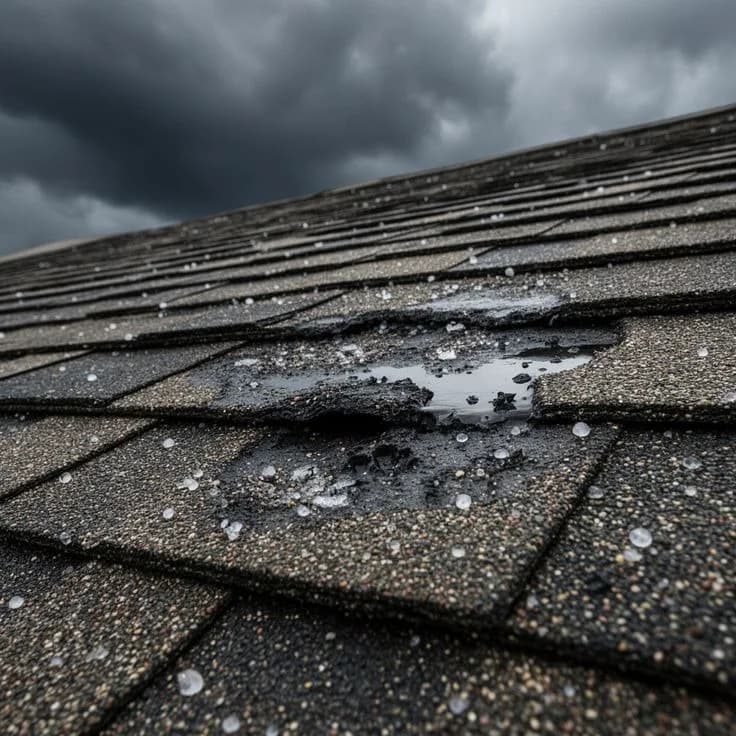
This one might seem obvious, but it's easy to miss if you aren't looking closely. Heavy winds can rip shingles entirely off, while hail can slam into them and leave deep fractures.
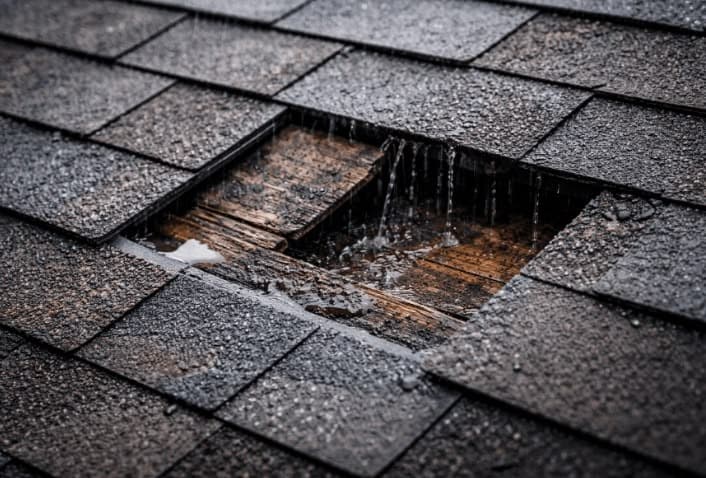
If a single shingle is missing or split down the middle, the water-resistant barrier below it is directly exposed to the elements. It won't take more than one or two good rainstorms for water to find a way past that underlayment and into your rafters.
7. The Roof Deck Feels "Spongy"
If you are brave enough to walk your roof (or if you hire a professional to inspect it), pay attention to how it feels underfoot. A healthy roof should feel solid and completely unyielding.
Pro Tip: If you step on a section and it feels soft, bouncy, or "spongy," that is a massive red flag. It means the plywood decking beneath the shingles has already been absorbing water and is beginning to rot away.
If you catch a problem while it's still on the outside of your roof, it's a repair. If you wait until it reaches the inside of your home, it becomes a major project. Take a few minutes every spring and fall to look up and check for these warning signs. Your wallet will thank you later.